
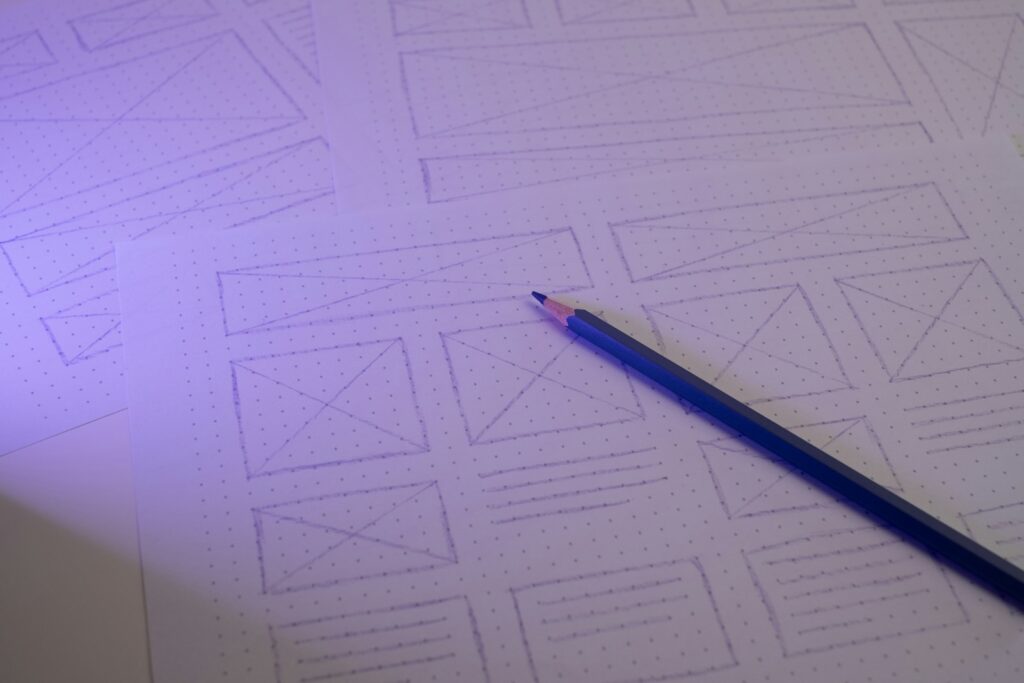
Quick answer: A website brief is a short document that answers what the site is for, who it is for, what pages and features it needs, how it should look and who supplies the content. Answering it before you talk to designers gets you accurate quotes, faster builds and a site that matches what you pictured. The single most useful thing to include is two to five links to websites you like, with a note on why.
Most website projects that go over time or over budget have the same root cause: nobody wrote down what the owner actually wanted. The designer guesses, the owner reacts, and three rounds of changes later everyone is frustrated.
A good brief fixes that. It takes about 30 minutes to think through, and it is the best half hour you will spend on the project. Below are the 25 questions that matter, grouped the way a designer will use them.
Your business
- What does your business do, in one or two sentences a stranger would understand?
- Who is your ideal customer? Think about who they are, where they are and what problem brings them to you.
- What are your top three services or products, the ones you most want more of?
- Why do customers choose you over a competitor? Speed, experience, guarantees, price, specialist skills?
- Who are your two or three main competitors, and what do you think of their websites?
Goals
- What is the main job of the website: phone calls, quote requests, bookings, sales, or credibility when people check you out after a referral?
- What would a good month look like? Put a number on it, such as 20 quote requests.
- What happens to an enquiry after it comes in? Who answers it, and how fast?
- Are you running, or planning to run, Google Ads or Facebook ads to the site?
Pages and features
- Which pages do you need? Home, about, a page per service, locations, gallery, reviews, FAQ, contact, careers?
- Do you work in specific suburbs or regions you want to be found for?
- Which features matter: quote form, online booking, click-to-call, before and after gallery, pricing, live chat, payments?
- Does the site need to connect to anything, such as a booking system, CRM, email marketing or accounting tool?
Look and feel
- How involved do you want to be in the design? “Make it look professional, I trust you” is a perfectly good answer.
- Which websites do you like, in any industry, and what specifically do you like about each one?
- Which websites or styles do you dislike?
- Which words describe how your brand should feel: modern, premium, friendly, bold, minimal, traditional, technical?
- Do you have a logo, brand colours and fonts? Any colours to avoid?
Content
- Who is writing the words: you, the designer, or a mix?
- Do you have good photos of your team, premises and work, or will you use stock or book a shoot?
- Do you have reviews, testimonials, case studies, awards or certifications to show?
Practical details
- Do you own your domain name, and do you have the login?
- Do you have hosting, and is it in your name?
- What is your budget range?
- Is there a launch date or hard deadline, such as a trade show or a new location opening?
Why “websites you like” is the most important question
Owners fall into two camps. Some just want a website that looks professional and works, and they are happy to let the designer choose. Others have a particular look in their head but find it hard to describe. Words like “clean” and “modern” mean different things to different people.
Links remove the guesswork. Three examples with a note like “I like the big photos and the simple menu on this one” tell a designer more than a page of description. Your examples do not need to be in your industry. Your new site will be designed in that direction with your own branding and content, not copied.
Why you should see design concepts before the build
The other big time-saver is seeing two or three homepage concepts side by side before any building starts. It is much easier to react to real options than to describe what you want in the abstract, and most owners know immediately which direction feels right. Changing a concept takes hours. Changing a finished website takes days.
Use our brief
We turned this list into an online questionnaire. It takes about 10 minutes, you can skip anything you are unsure of, and you can upload your logo and examples. Fill in the website brief here and you will get a fixed quote within one business day.
Planning a new website?
Next step: fill in the website brief. It takes about 10 minutes, and you get a fixed quote within one business day, then 2 or 3 design concepts to compare before anything is built. See website packages and care plans.

Written by Gregory
20 years building websites and running lead generation, mostly with my own money on the line. Based in Sydney, working with clients worldwide. How I work →